FINANCIAL LITERACY AND SMART METHOD

Published:

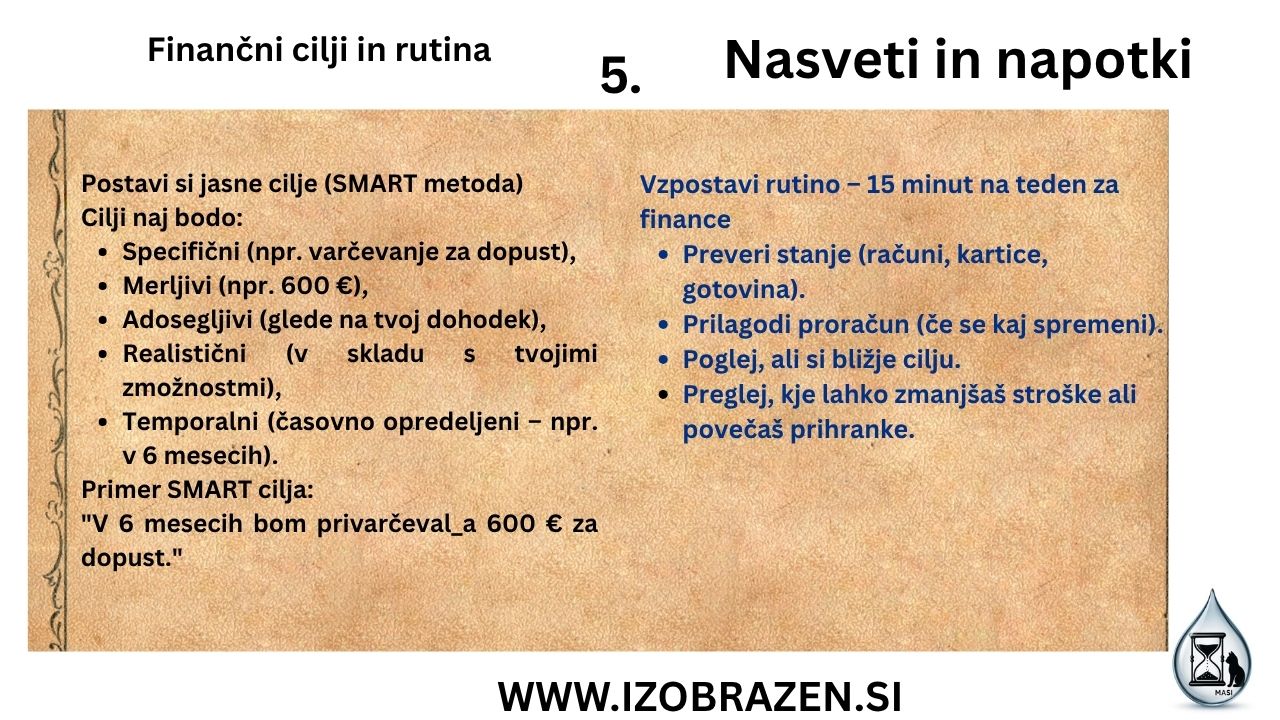
Set clear goals (SMART method)

The goals should be:

  • Specific (e.g. saving for a vacation),
  • Measurable (e.g. €600),
  • Affordable (based on your income),
  • Realistic (according to your capabilities),
  • Temporal (time-specific – e.g. within 6 months).

Example of a SMART goal:

“In 6 months I will save €600 for a vacation.”

Establish a routine – 15 minutes a week for finances

  • Check your balance (accounts, cards, cash).
  • Adjust the budget (if anything changes).
  • See if you're closer to your goal.
  • See where you can reduce costs or increase savings.
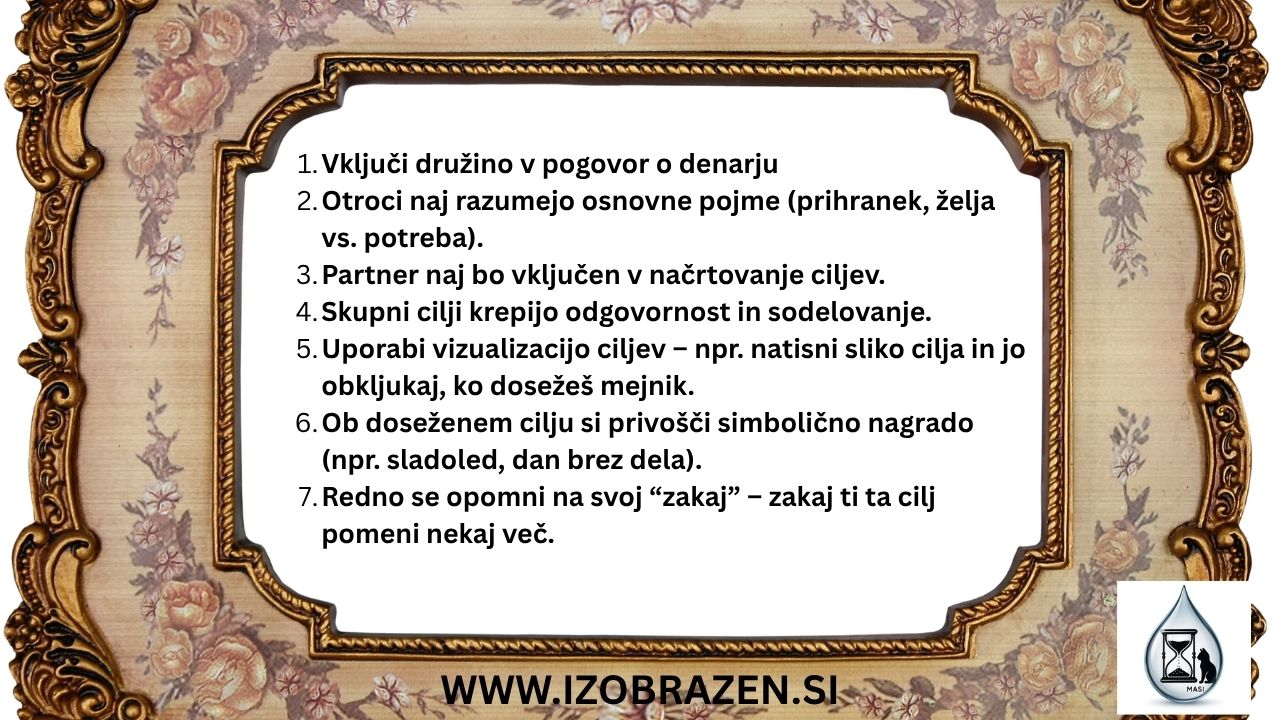
  • Involve your family in the conversation about money.
  • Children should understand basic concepts (savings, want vs. need).
  • The partner should be involved in planning the goals.
  • Shared goals strengthen accountability and cooperation.
  • Use goal visualization – for example, print out a picture of your goal and check it off when you reach a milestone.
  • When you reach your goal, treat yourself to a symbolic reward (e.g. ice cream, a day off from work).
  • Regularly remind yourself of your "why" - why this goal means something more to you.
SMART cilji,finančni cilji,osebne finance,finančna rutina,kako postaviti cilje,merljivi cilji,dosegljivi cilji,realistični cilji,časovno opredeljeni cilji,družina in finance,finančna disciplina,motivacija za varčevanje